




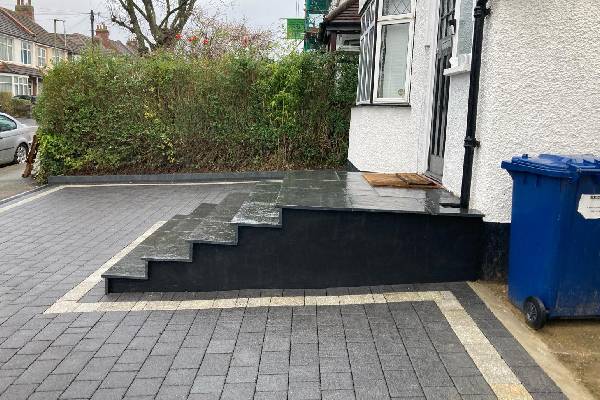
When people search for landscaping London or landscaping contractors London, they’re often really asking one thing: How do I make my outdoor space easier to live with, and still look great year-round?
That’s where hard landscaping comes in. It’s the built stuff: patios, paths, paving, edging, steps, walls, drainage and decking. In a city like London, it matters even more because we get plenty of wet days (Heathrow averages 111.66 days a year with at least 1mm of rain in the 1991–2020 period).
Below is a simple, real-world guide to patios, paths and paving so you can plan the job properly and choose the right contractor.
What is hard landscaping (and what isn’t)?
Hard landscaping = the “structure” of your garden:
- Patios and seating areas
- Garden paths and side access paths
- Paving (front, back and around the house)
- Steps, kerbs and edging
- Retaining walls, raised planters, small brickwork features
- Drainage features (channels, soakaways, permeable paving, French drains)
- Decking platforms and frames
Soft landscaping = the living bits:
- Turf, plants, shrubs, trees, beds, borders
A good London garden usually needs both. Hard landscaping gives the shape and function, soft landscaping brings warmth and life.
Patios in London: what you’re really choosing
A patio isn’t just “some slabs”. It’s your outdoor living room.
1) Patio materials (the most common options)
Porcelain paving
- Very popular in London because it’s generally low-porosity, easier to clean, and tends to resist staining and frost better than many natural stones.
- Great if you want a crisp, modern look with less maintenance.
Natural stone (sandstone, limestone, slate)
- Timeless, slightly more “organic” look
- Can need a bit more care (sealing and mindful cleaning), depending on the stone.
Concrete paving
- Practical and often more budget-friendly
- Good for clean lines and simple layouts
Stonecraft Landscapes lists common patio styles including concrete patios and natural stone options like slate or limestone, which is a pretty standard mix for London homes.
2) Patio layout decisions that make it feel “right”
Before you pick a slab colour, decide:
- How many people you want to seat (a 2–4 person bistro set needs far less space than an 8-seater table)
- Where the sun hits (London gardens can be shaded; positioning matters)
- Whether you need a step down from the back door or a flush threshold
- Where water will go when it rains (more on drainage below)
3) What does a patio cost in London?
Costs vary a lot based on access, groundwork, drainage and materials. As a broad UK guide, Checkatrade notes patio laying can range from £65 to £475 per m² depending on specification.
That big range is exactly why two quotes for the “same size patio” can look wildly different.
Garden paths in London: small details, big difference
Paths are underrated until you’re carrying bins in the rain.
Best-practice path design (simple rules)
- Width: around 900mm–1,200mm feels comfortable for daily use (especially side returns)
- Grip: choose a surface that’s safe when wet (textured porcelain, riven stone, properly finished paving)
- Lighting: a couple of low lights or solar markers can make winter evenings far less slippery and stressful
- Edges: proper edging stops spreading, rocking slabs, and that messy “crumbly side” look over time
Common path material choices
- Matching paving slabs (clean and simple)
- Block paving (great for curves and neat borders)
- Gravel (budget-friendly, but needs containment and isn’t ideal for everyone)
- Resin-bound surfacing (smooth and permeable when installed correctly).
Paving and hard standing: drainage and planning basics (don’t skip this)
In London, drainage isn’t optional. Poor run-off is one of the fastest ways to ruin patios, paths and paved areas.
Do you need planning permission?
For front gardens / drive areas, the rule of thumb is:
- You generally don’t need planning permission if the surface is permeable/porous (or if water is directed to a permeable area like a lawn or border).
- The UK government guidance also explains using permeable surfaces, soakaways and similar approaches to reduce run-off, and notes the advice can apply to areas like patios too.
Good landscaping contractors in London should bring this up early, not after the slabs are down.
The “boring bits” that decide whether it lasts 2 years or 20
Most failed paving jobs fail underneath the surface.
A proper hard landscaping build usually includes:
- Dig-out/excavation to the correct depth
- A solid, compacted sub-base
- Correct levels and falls so water runs away from the house
- Clean edges and restraints so nothing creeps or sinks
- The right jointing/pointing for the chosen material
As a practical example of timescales, Checkatrade notes a typical 20m² patio often takes a tradesperson three to four days to lay (and more complex designs can take longer).
That’s a helpful benchmark because it usually includes proper preparation, not a rushed “slabs-on-sand” job.
Common London hard landscaping mistakes to avoid
These are the ones that cost money twice:
- No drainage plan
Water sits, joints fail, algae builds, and you end up pressure-washing constantly. - Weak sub-base / poor compaction
You’ll see dips where people walk or where furniture sits. - Patio too small
Looks fine empty, but once you add a table, chairs and a barbecue, it feels cramped. - Ignoring access and waste removal
London jobs often have tight access. Make sure the quote includes removal of spoil and a clear plan for getting materials in. - Forgetting the “finishing touches”
Edging, steps, small walls, and drainage channels are what make the job look intentional, not “patched together”.
How to choose landscaping contractors in London (quick checklist)
When you’re comparing landscaping contractors London, ask these:
- Can you explain the build-up (dig-out, sub-base, drainage, finishing)?
- What’s included in the quote: waste removal, edges, steps, drainage?
- Do you have public liability insurance?
- Will you confirm how you’ll manage run-off (especially for front areas)?
- Can I see recent work nearby (even a quick drive-by)?
If the answers are vague, the job usually is too.
A note on Stonecraft Landscapes (service fit)
Stonecraft Landscapes is based in Mill Hill and offers work across North London, North West London and Middlesex, covering hard landscaping essentials like driveways, patios and pathways, plus brickwork, fencing/railings/gates, hard and soft landscaping, planting, water features, and drainage, and they note they comply with local authority planning regulations for driveways and hardstanding.
So if your “hard landscaping in London” project is in those areas, they’re set up for the exact mix most homeowners need: patios, paths, paving, plus the supporting bits (walls, drainage and finishing details).
Quick FAQs
How long does a patio take?
A typical 20m² patio is often around 3–4 days for a professional, depending on access, groundwork and design.
Is porcelain paving slippery?
Outdoor porcelain commonly comes in textured finishes designed for grip, and it’s widely promoted as a safer option in wet conditions compared with smoother surfaces.
Do I need planning permission for paving the front?
Often no, if it’s permeable or drains to a permeable area.