




To put that into context, the Met Office long-term averages for Heathrow show around 120.43 days per year with at least 1mm of rain (1991–2020).
So whichever option you choose, it needs to look good and cope well with damp conditions.
This guide explains the pros and cons, with practical examples you can use when speaking to patios contractors (or any patios contractor) in London.
First, what’s the real difference?
A patio
A patio is a solid, hard surface built from paving slabs, stone, concrete, or similar materials, installed on a properly prepared base with correct drainage falls.
Decking
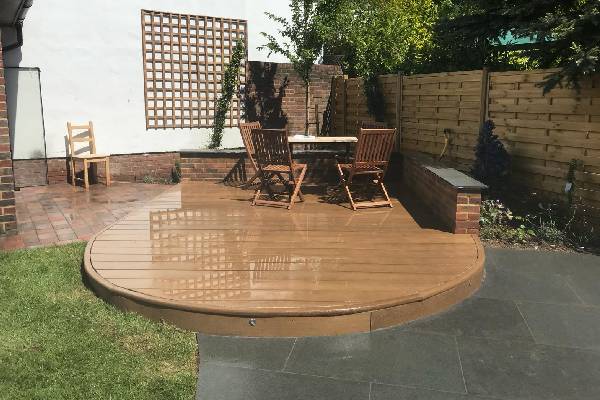
Decking is a raised or ground-level timber or composite platform built on a frame, often used to level out uneven gardens or create a comfortable “outdoor room” feel.
Both can be excellent in London. The best option depends on levels, drainage, maintenance preference, and how you use the space.
Quick answer: when decking wins vs when patios win
Decking is usually better when:
- Your garden is uneven and you want a level seating area without major excavation
- You want a warmer feel underfoot (especially for kids)
- You want to step out from bi-folds or a back door into a flush platform
A patio is usually better when:
- You want the lowest maintenance long-term (generally)
- You’re worried about slipperiness, algae, and damp (common in shaded London gardens)
- You want a surface that handles heavy furniture, hot BBQs, and planters with less fuss
Cost in London: what to expect (ballpark)
Prices vary a lot by access (terraced houses can be tricky), groundworks, drainage, and finish level.
Checkatrade’s cost guides give useful “sanity check” ranges for materials and common specs, including comparisons for patio and decking options.
A good rule in London is: groundworks and waste removal can make or break the final quote, especially if the job involves a lot of digging out or removing old concrete.
Tip: When comparing quotes, make sure both include the same scope: excavation depth, sub-base, drainage, edging, removal of spoil, and finishing.
Maintenance in London weather: the honest view
Patios (paving)
Pros
- Generally easier to keep tidy: sweep, occasional wash, re-point/joint as needed
- Less prone to “hidden rot” issues because it’s not a framed structure
Watch-outs
- Shady gardens can grow algae or moss (especially north-facing areas)
- Jointing can degrade over time if water sits on the surface
Decking (timber or composite)
Pros
- Comfortable underfoot and looks great when new
- Great for creating a level area over awkward ground
Watch-outs
- Timber can need regular care (cleaning, staining/oiling depending on product)
- If airflow underneath is poor, damp can cause quicker wear
- Composite reduces some maintenance, but it still needs cleaning and can get slippery if neglected
If you’re the type who wants a garden you can “set and forget” most of the year, a patio usually wins.
Drainage and safety: big deal in shaded London gardens
London gardens often have:
- Less direct sun
- Higher chance of damp patches
- More leaf litter (street trees, neighbouring gardens)
So think about:
- Slip resistance in wet weather
- Where water will go during heavy rain
- Whether you’ll be constantly fighting green algae in winter
With patios, a professional installer can design the falls (gentle slopes) and add discreet drainage solutions to push water away from the house.
With decking, it’s more about:
- Proper gaps between boards
- Airflow underneath
- A sub-structure that won’t trap water
Planning permission: do you need it?
Decking rules (important)
Planning Portal guidance says decking is usually permitted development (no planning application needed) if:
- It is no more than 30cm above the ground
- It covers no more than 50% of the garden (with other extensions/outbuildings)
- None of it is in front of the principal elevation facing the road
Extra limitations can apply in certain areas.
Patios
Back garden patios are often straightforward from a planning point of view, but drainage and surface water management still matter for a long-lasting build.
If your property is listed or in a conservation area, it’s always sensible to double-check restrictions before you build anything significant.
“Real London Garden” examples
Example 1: Small terraced garden with a slight slope
- You want a level seating area for a table and chairs.
- Digging out for a perfectly level patio might increase spoil removal costs.
Often best: Decking can be a smart solution here, because it creates a level platform with less excavation (if designed properly).
Example 2: North-facing garden that stays damp
- You want something that stays safe and tidy through autumn and winter.
Often best: A patio (with good falls and the right surface) tends to be easier to keep clean and less risky if you’re worried about slipperiness and algae.
Example 3: You host a lot (BBQ, heavy planters, fire pit)
Often best: A patio is usually more forgiving for heat, heavy loads, and constant moving of furniture.
Questions to ask patios contractors (and decking installers) in London
Whether you choose decking or paving, ask these before you accept a quote:
- How will you handle drainage and levels?
- What’s included for dig-out and waste removal?
- What base or sub-structure will you use (and how will it be built)?
- What’s your approach for slip resistance and winter conditions?
- What maintenance will I realistically need to do each year?
- What guarantee is included, and what does it cover?
A good patios contractor will answer calmly and clearly, with specifics.
So, which is better for a London garden?
Choose decking if you need to solve levels, want a warmer feel, and you’re happy to keep on top of cleaning and upkeep.
Choose a patio if you want lower maintenance, better “all-season practicality,” and a surface that can handle heavy use with fewer surprises.
Local note (North London, North West London, Middlesex)
Stonecraft Landscapes is based in Mill Hill and offers services across North London, North West London and Middlesex, including patios plus landscaping and decking as part of their wider outdoor works.