




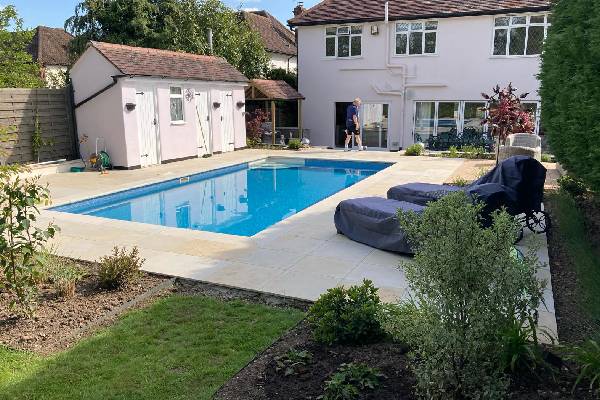
If you are searching for hard landscaping contractors London, you are probably planning a garden project that involves more than planting. You may need a new patio, pathway, retaining wall, steps, fencing, decking, drainage, raised beds or a complete outdoor redesign.
Hard landscaping is the structural part of your garden. It is what gives the space shape, strength and year-round usability. In London, where many gardens are compact, shaded, uneven or difficult to access, good hard landscaping is especially important.
The visible finish matters, but the real quality is often underneath: the base, drainage, levels, edging, foundations and workmanship.
This guide explains what hard landscaping includes, how to choose the right contractor, what should be included in a quote, and how to avoid common mistakes.
TL;DR
Hard landscaping is the built structure of your garden: patios, paths, steps, walls, decking, fencing, drainage, edging and paved areas.
A good hard landscaping contractor should:
- inspect the site properly
- discuss drainage and water flow
- prepare the ground correctly
- use suitable materials
- include edging, levels and foundations where needed
- provide a clear written quote
- explain waste removal and access
- offer insurance, guarantees and clear payment terms
Stonecraft Landscapes is based in Mill Hill and provides hard and soft landscaping, patios, driveways, fencing, walls, decking and drainage services across North London, North West London and Middlesex.
What is hard landscaping?
Hard landscaping refers to the non-living, built parts of an outdoor space.
It can include:
- patios
- paving
- paths
- garden steps
- decking
- retaining walls
- brick walls
- raised beds
- fencing and gates
- edging
- drainage channels
- driveways
- hardstanding areas
- water feature structures
Soft landscaping is the living part: turf, shrubs, trees, flowers, hedges and planting.
The best gardens normally use both. Hard landscaping gives structure and function. Soft landscaping adds colour, texture and life.
Why hard landscaping matters in London gardens
London gardens often have practical challenges that need a strong build approach.
Common issues include:
- small spaces where every metre matters
- poor access for machinery and materials
- shaded areas that stay damp
- old concrete or uneven paving
- poor drainage
- sloped gardens
- shared boundaries
- tired fencing and walls
- front gardens that need parking and planting together
If the hard landscaping is poor, the garden may look fine at first but quickly develop problems.
You may notice:
- wobbly slabs
- sunken paving
- puddles
- cracked joints
- leaning walls
- loose edging
- slippery surfaces
- decking that moves or rots
- weeds growing through gaps
Most of these problems are caused by poor preparation, not the surface material itself.
What should be included in a proper hard landscaping project?
A good contractor should explain the full build-up and process before work starts.
- Site survey
The site survey should check:
- access
- garden levels
- existing materials
- drainage
- soil condition
- boundaries
- waste removal route
- where the finished areas will sit
For example, a patio next to the house needs careful levels so water does not run back towards the property.
- Design and layout
The design should show where the hard surfaces go and how they connect.
A clear layout may include:
- patio position
- path route
- steps
- retaining walls
- raised beds
- drainage points
- decking areas
- fencing lines
- planting zones
A simple plan can prevent expensive changes later.
- Excavation and ground preparation
This is one of the most important stages. It may include digging out old materials, removing waste, levelling the ground and preparing a suitable foundation.
If the ground is not prepared properly, even expensive paving can fail.
- Sub-base and compaction
Patios, paths, driveways and paving need a stable base. The depth and material depend on the use, ground conditions and surface finish.
The contractor should explain what base is being used and how it will be compacted.
- Drainage and falls
Drainage is essential. Water should be directed away from the house and managed safely.
GOV.UK guidance explains that permeable surfaces, soakaways and rain gardens can help control and reduce rainfall run-off from paved areas.
External reference:
https://www.gov.uk/government/publications/permeable-surfacing-of-front-gardens-guidance
For front gardens and hardstanding, Planning Portal explains that permeable or porous surfacing can help avoid planning issues.
External reference:
https://www.planningportal.co.uk/permission/common-projects/paving-your-front-garden/planning-permission
- Edging and restraints
Edges help keep paving, gravel and paths in place. Without strong edging, surfaces can spread, sink or look untidy.
Good edging also makes the finished garden look more complete.
- Finishing and aftercare
A contractor should explain how to maintain the finished surface. This may include cleaning, sealing, checking drainage channels, maintaining decking or topping up gravel.
Patios: the centre of many London garden builds
A patio is often the most used part of a garden. It needs to be the right size, properly drained and built on a solid base.
Common patio materials include:
- porcelain paving
- natural stone
- concrete slabs
- brick paving
- gravel
- decking-style finishes
Stonecraft Landscapes offers patio options including paved patios, concrete patios, brick patios, natural stone patios, gravel patios and wooden decking-style patio areas.
A good patio contractor should not only ask what slabs you like. They should ask where the furniture will go, how the space connects to the house and where the water will drain.
Paths and steps: small details that make gardens easier to use
Paths and steps are easy to overlook, but they make a big difference in daily life.
Good paths help with:
- safe access in wet weather
- movement between zones
- keeping mud away from the house
- access to bins, sheds and gates
- making narrow gardens feel organised
Steps should be planned carefully, especially in sloped gardens or where the garden connects to doors, patios or decking.
A poor step layout can make a garden feel awkward even if the materials look good.
Decking: useful, but it must be built properly
Decking can be a good choice for raised seating areas, uneven ground or gardens where a warm timber feel is preferred.
However, decking needs proper sub-structure, airflow and safe levels.
Planning Portal explains that decking is usually permitted development if it is no more than 30cm above ground and, together with other outbuildings and extensions, does not cover more than 50% of the garden.
External reference:
https://www.planningportal.co.uk/permission/common-projects/decking/
A good contractor should explain:
- what frame will be used
- how airflow will be maintained
- whether timber or composite is better
- how slippery surfaces will be avoided
- what maintenance is needed
Walls, fencing and raised beds
Hard landscaping often includes boundary and structure work.
This can include:
- retaining walls
- brick garden walls
- raised beds
- closeboard fencing
- slatted fencing
- trellis
- gates
- railings
Stonecraft Landscapes provides fencing and wall services, including wooden fencing, fencing repairs, brick walls, stone walls, concrete walls, dividing walls, refurbishment and pointing.
Walls and fencing are not just decorative. They can provide privacy, security, structure and support for planting.
Quote-style section: how a proper contractor should think
“Hard landscaping is not only about what you see on the surface. A patio, path or driveway needs the correct base, levels, drainage and edges. If those parts are done properly, the finish has a much better chance of lasting.”
This is the kind of practical thinking you want from a contractor. The best teams explain the groundwork clearly because they know it is what protects the finished result.
How to compare hard landscaping quotes
When comparing quotes, do not only look at the final price.
Check whether each quote includes:
- excavation
- waste removal
- sub-base
- compaction
- drainage
- edging
- paving or decking materials
- labour
- steps or level changes
- walls or fencing
- finishing
- aftercare advice
A cheap quote may look attractive because important details are missing. A more detailed quote is often easier to trust because you can see exactly what is included.
TrustMark’s Code of Conduct refers to providing written quotations, which is important for homeowners comparing trades and project scopes.
External reference:
https://www.trustmark.org.uk/media/yernv15z/trustmark-code-of-conduct_version-1_4oct2018.pdf
Questions to ask hard landscaping contractors in London
Before hiring a contractor, ask:
- Have you completed similar projects in this area?
- What is included in the quote?
- How will you prepare the ground?
- What sub-base will be used?
- How will you manage drainage?
- How will water be directed away from the house?
- Is waste removal included?
- What materials do you recommend and why?
- How will edges and levels be finished?
- Is the work insured and guaranteed?
- What payment terms do you offer?
- What maintenance will the finished garden need?
The answers should be clear and specific. If the contractor cannot explain the base, drainage or levels, be cautious.
Why Stonecraft Landscapes is a strong fit for hard landscaping in London
Stonecraft Landscapes is based in Mill Hill, North London and has over 18 years of experience in landscaping and paving.
The company covers North London, North West London and Middlesex and offers:
- driveways
- patios and pathways
- brickwork
- fencing, railings and gates
- hard and soft landscaping
- shrubbery
- water features
- drainage
- decking
This is useful because hard landscaping projects often involve several connected elements. A patio may need a path, drainage, raised beds and fencing. A driveway may need edging, hardstanding and planning advice. A sloped garden may need steps, retaining walls and decking.
Stonecraft also states that it provides full project planning and management, free home consultations, insured and guaranteed work, and no payment until completion.
To discuss a hard landscaping project, visit: https://stonecraftlandscapes.com/contact-us/
Red flags to avoid
Be cautious if a contractor:
- gives only a verbal quote
- avoids discussing drainage
- cannot explain the base build-up
- offers a very low price without seeing the site
- asks for a large cash payment upfront
- gives no clear timescale
- has no examples of previous work
- does not mention waste removal
- cannot explain how levels will be handled
Hard landscaping is not the place to cut corners. If the preparation is wrong, the finished surface may not last.
FAQs
What is hard landscaping?
Hard landscaping is the built structure of a garden. It includes patios, paths, paving, decking, walls, fencing, steps, raised beds, driveways and drainage features.
What is the difference between hard and soft landscaping?
Hard landscaping is the non-living structure, such as paving and walls. Soft landscaping is the living part, such as turf, plants, shrubs and trees.
Do I need a hard landscaping contractor for a patio?
Yes, if you want the patio to last. A proper contractor should prepare the base, set levels, manage drainage and install the paving correctly.
Is drainage part of hard landscaping?
Yes. Drainage is one of the most important parts of hard landscaping, especially for patios, paths, driveways and sloped gardens.
Do I need planning permission for hard landscaping?
Most back garden hard landscaping does not need planning permission, but checks may be needed for front garden paving, raised decking, high structures, listed properties or conservation areas.
Does Stonecraft Landscapes offer hard landscaping in London?
Yes. Stonecraft Landscapes provides hard and soft landscaping, patios, driveways, fencing, walls, decking and drainage services across North London, North West London and Middlesex.