




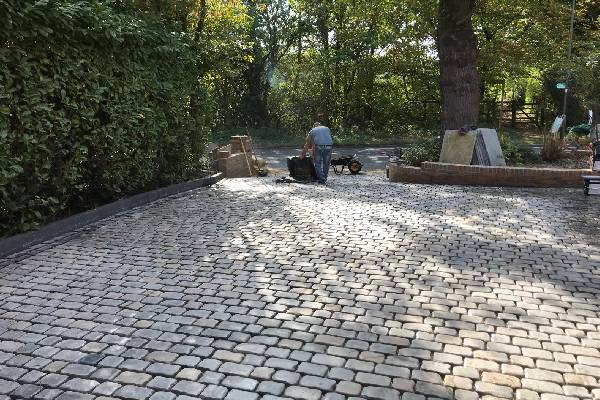
Nothing ruins a smart driveway faster than weeds pushing up between the joints, creeping along the edges, or popping out of tiny cracks like they own the place. And in London, where damp weather, shade, and leaf litter are common, weeds can feel like a never-ending battle.
Here’s the good news: most weeds aren’t actually growing “through” a properly built driveway. They’re usually growing in it — in the sand/dust that settles between blocks, in cracks, or along weak edges where soil collects.
This guide explains what’s really causing the problem and gives you a long-term plan that works for block paving, resin, tarmac, gravel, and concrete — using a mix of prevention, repair, and sensible maintenance
First: why weeds show up on driveways
Weeds need three things:
- A place to root (sand, silt, cracks, loose joints, soil at the edges)
- Moisture (rain, shade, poor drainage, moss build-up)
- Seeds (blown in by wind, dropped by birds, carried in on shoes/tyres)
So if your driveway has:
- joints filled with dirt instead of clean jointing sand,
- cracks that hold moisture,
- edges that aren’t restrained properly,
- or puddles that sit after rain,
…weeds will keep returning no matter how many times you pull them out.
The “for good” mindset (honest but helpful)
Let’s be real: outdoors, nothing is forever. Seeds will always land on surfaces.
But you can make weeds a rare, occasional annoyance instead of a monthly nightmare — by fixing the conditions that allow them to root.
Think of it like this:
- Quick fix: Pull weeds / spray weeds
- Proper fix: Remove the rooting medium + seal/secure the surface + stop new seed build-up
Step 1: Identify your driveway type (the solution depends on it)
Block paving (most common weed complaints)
Weeds usually grow in the joints because:
- jointing sand has washed out,
- dirt has built up in the joints,
- edges have spread slightly, opening gaps.
Resin-bound
Weeds don’t normally grow up through a correctly installed resin-bound surface, but you can get:
- weeds at the edges where resin meets soil,
- moss/algae build-up in shaded, damp areas,
- occasional weeds in tiny weak spots if the base has movement.
Tarmac (asphalt)
Weeds appear when:
- cracks form and hold silt,
- edges break down,
- standing water speeds up surface wear.
Gravel
Weeds can be persistent if:
- there’s no membrane (or the wrong one),
- the gravel layer is too thin,
- the gravel has become mixed with soil over time.
Concrete
Weeds appear in:
- cracks,
- expansion joints,
- edges where soil builds up.
Step 2: Remove weeds properly (without making the problem worse)
The best approach for most homeowners
- Pull or scrape larger weeds first (after rain is easiest)
- Remove roots where possible (a narrow weeding knife helps)
- Clear the joints/cracks so you’re not leaving the “weed compost” behind
Avoid simply snapping the top off. That often encourages regrowth.
About weed killers (use carefully)
If you use a weed killer, follow the label and keep it targeted. A few practical tips:
- Use on a dry day (so it doesn’t wash straight off).
- Keep kids/pets away until safe, as per product instructions.
- Never mix chemicals (especially never mix bleach with other products).
If you prefer non-chemical options:
- Boiling water on small areas (careful near plants you want to keep)
- A weed burner/torch (only if safe and appropriate, and never near dry planting, fences, or fuel storage)
Step 3: The real fix (stop weeds coming back)
A) For block paving: clean, re-sand, and lock the joints
This is the big one. If you want long-term weed control on block paving, do this:
1. Deep clean the joints
- Sweep thoroughly.
- Use a pressure washer carefully (not too close, not too aggressive), aiming to lift out dirt in the joints rather than blasting everything everywhere.
- Let it dry.
2. Re-sand with kiln-dried sand
- Once fully dry, brush kiln-dried sand into the joints until they’re packed.
- Repeat after a day or two as it settles.
3. Optional: use a quality jointing compound
For some paving setups, a proper jointing compound can reduce future weed growth by hardening joints and resisting wash-out. The key is using the right product for your paving and joint width.
4. Consider sealing (only after the paving is stable and dry)
Sealing can help reduce joint contamination and staining, but it’s not magic. If the driveway is moving or joints are poorly filled, sealing won’t fix the root cause.
Best result: clean joints + correct sand fill + good edging + sensible maintenance.
B) Fix the edges (where most weeds begin)
Look closely at the driveway perimeter:
- Where paving meets a flower bed
- Along fences/walls
- At the threshold to the path or gate
These areas collect soil and moisture, which is basically a weed nursery.
Long-term solutions:
- Install or repair edging restraints (kerbs, soldier course blocks, concrete edge)
- Create a neat border with gravel strip or planted edge that’s properly contained
- Keep a small gap clear from soil build-up (regular sweeping helps)
If your block paving edges have spread, weeds will keep returning until the edge is re-secured.
C) Improve drainage (weeds love damp, mossy surfaces)
If you see puddles after rain, you’ll also see:
- algae,
- moss,
- faster joint breakdown,
- and more weed-friendly silt build-up.
Fixes may include:
- correcting the fall (the gentle slope that moves water away)
- adding a discreet channel drain
- choosing a more permeable solution in problem areas
This is especially relevant in London gardens and front drives where shade and moisture hang around.
D) For tarmac: repair cracks early (before they become “weed lanes”)
For tarmac driveways:
- Fill small cracks promptly with a suitable crack filler.
- Keep edges tidy and supported.
- Consider resurfacing if the surface is breaking down across a large area (lots of cracks = lots of rooting spots).
Weeds in tarmac are usually a symptom of surface wear.
E) For gravel: the membrane matters, but thickness matters more
A membrane helps, but gravel driveways still get weeds because seeds germinate in the dirt that builds up on top.
For a long-term gravel driveway:
- Use the right membrane (permeable, heavy-duty)
- Keep gravel depth healthy (thin gravel = easy rooting)
- Top up gravel periodically
- Rake and remove leaf litter so it doesn’t become compost
If your gravel has become mixed with soil, sometimes the best fix is to lift and refresh sections properly.
F) For concrete: seal cracks and joints
Concrete weeds almost always come from cracks/joints that collect silt.
- Clean out cracks thoroughly
- Fill with the correct exterior filler
- Keep edges clear of soil build-up
You don’t need to spend every weekend battling weeds. Do this instead:
Weekly (2 minutes)
- Quick sweep to remove leaves, soil, and seeds from joints and edges.
Monthly (10–20 minutes)
- Spot-treat any tiny weeds early (pull or targeted treatment).
- Check edges for soil build-up.
Twice a year (spring + autumn)
- Deeper clean (especially shaded areas).
- Re-sand block paving joints if needed.
- Inspect for cracks and drainage issues.
This routine prevents the “compost layer” forming on your driveway — and that’s what keeps weeds under control long term.
When weeds mean the driveway needs fixing (not just cleaning)
If you notice any of these, the issue is structural:
- Blocks are rocking or dipping where cars sit
- Joints constantly wash out after rain
- The driveway has standing water
- Edges are spreading or collapsing
- Weeds return within 1–2 weeks even after cleaning and re-sanding
In these cases, you may need:
- edge restraints repaired,
- sections lifted and re-laid,
- base/sub-base work,
- drainage improvements.
That’s the point where a landscaping contractor is worth it — because you’ll stop paying in time and repeat treatments.
Need help in North London, North West London or Middlesex?
If your driveway needs more than a tidy-up (sunken areas, poor drainage, edges failing), it’s usually best to get it assessed properly and fix the cause. Stonecraft Landscapes covers driveways alongside patios, paving and landscaping across North London, North West London and Middlesex, which is useful if weeds are part of a bigger issue like levels or drainage.